Category Archives: Quote & Unquote
There’s an abundance of wisdom out there; this is my attempt to be learned by borrowing some of it for personal perusal.
think twice before you reject parental objection (part one).
This is my second attempt at writing a new post for in the original entry, I went on and on, and so out of point that the article just took on a life of its own and became substantial enough for a separate (and totally unrelated) entry. So I shall keep this entry short and sweet, and write about what I had actually intended to post.
Tonight, I shall simply offer a rhetorical question but actually expect different responses:
“Would you rather have parental objection or parental rejection? And why?”
I know the answer is obvious but I want to know why most of us would choose the former. Do share your thoughts with me, if you will. I’m pretty sure some responses would surprise me.
I’d go to the extent of stating that parental objection is a BLESSING; so young people, don’t take parental objection – however annoying, frustrating, constricting and infuriating you may perceive it to be – for granted.
This was the one lingering thought on my mind the entire day. Now, tell me what’s on yours.
thirteen thoughts after 30 hours of Rhema.
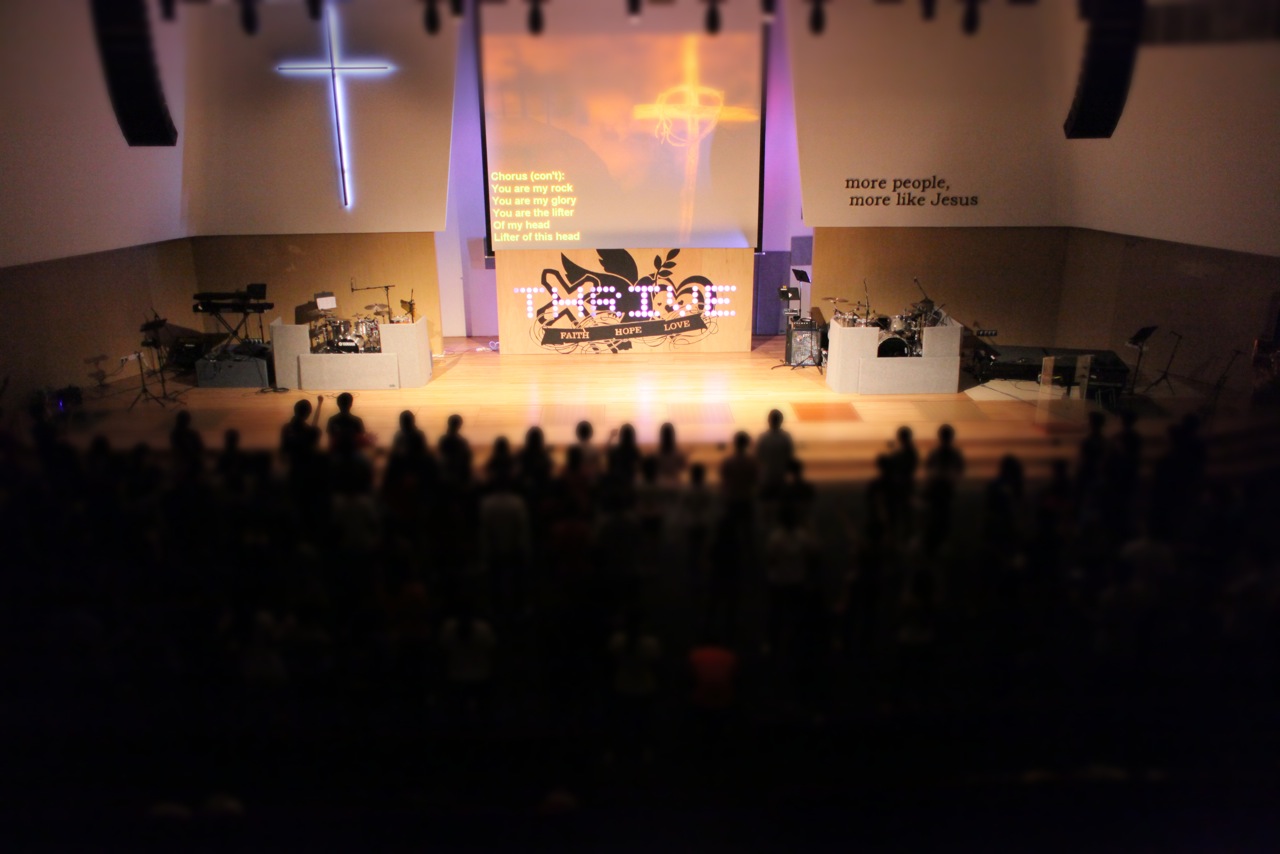
1. Faith is the confidence that what we hope for will actually happen; it gives us assurance about things we cannot see (Hebrews 11:1, NLT).
2. Faith is not what you do but who you know, not where you go but who you follow and not what you hear but who you hear from.
3. For the first time in the history of Grace AG, R-AGE and Rhema, our young people worshipped God without anyone on stage leading them.
4. The greatest testimony today belonged to Kenneth, who by faith rehearsed last night, before requesting for unlikely eventual approval from his CO.
5. Putting out 2 drum sets was sparked by a Newsboys video I watched more than a decade ago and it was a delight to see Janice and CAMY actualising it.
6. I felt the Spirit’s stirring as early as 7:15am, during prayer time with my team, resulting in lots of tears, snot and a revitalised spirit.
7. While the “musician-less” idea was inspired from my time with SOAR247 in Shanghai, it was Melody’s earnest reading of Scripture that moved me deeply.
8. Completely non-sequitur, but I do miss jamming with a band, rocking with a team of musicians and performing my heart out.
9. I will always, always retain a soft spot for the worship team because I spent my first decade of ministry as a worship leader.
10. I enjoy breaking norms, casting vision and accomplishing feats no one has done before; the more it can’t be done, the more I want to do it.
11. When the respect is earned, when the authority is established, when the role is played out, when the work is finished, the title becomes secondary.
12. Ministry is about people. Sometimes it’s about work, but this work should always revolved around people; I thank God I work with young people.
13. Talking to young people whom you’re unfamiliar with at first soon ignites in you God’s love for them, and you’ll never see them the same way again.
12 things we hate about youth ministry.
I don’t normally cut and paste wholesale but this insightful article is a fantastic read. My dear young people, do remember to find pockets of time to get some rest and not burn yourself out with ministry demands. Let’s be excellent but let’s also think long-term! And above all else, remember to pray and enjoy the ride! I have so much on my plate but I am learning to take it a task and a day at a time, knowing that tomorrow has its own battles!
The full article is found here.
***
12 things we hate about youth ministry
by Doug Fields & Matt McGill
Serving in youth ministry is great, but sometimes we allow our priorities to get mixed up and give it more than we should. When the needs of the ministry consume and devour our lives, and it results in no margin, no accountability, and no joy…it’s time to change things. Here are some of the warning signs, 12 things we hate about youth ministry:
- Fatigue can result in poor leadership decisions. This season, get some rest!
- The nagging feeling that we may have given up too early on that one high maintenance kid.
- Overload leads to taking short cuts and doing what’s easy rather than doing what is best (or right).
- Sometimes we’re tempted to skim in our spiritual lives since people really don’t know if we skip our personal devotions.
- We can take criticism personally and use it as a club to beat our self up.
- We believe the lie that our ministry is the most important one in the church. We become territorial and build high walls around youth ministry within the church.
- Insecurities and fears feed one another until they’re consuming. While cocooned, we rest on our laurels, refuse to take risks, and become satisfied with the way things are.
- Our drive to be faithful and grow the ministry can move us from honest persuasion to manipulation.
- We feel like unsung heroes, wallow in self pity, and then feel guilty for having a need to be affirmed.
- We get confused or indignant when other leaders seem to love the ministry as much as we do.
- We let success feed the self-deception that says, “I did this on my own power…or…I can do this on my own power.”
- The pressure to perform and please others distracts us from trusting God.
Christmas is a great time to step back and remember the important things in life: God’s love for us is unchanging, uncompromising, and unconditional. He loves our students more than we do and is working within to draw us closer.
***
missed the bus again? don’t fret.
This morning, I was powerless to prevent the bus from taking off without me.
Normally, I would leave home when SBS iris tells me that my bus was going to depart in 5 minutes. I did likewise today but forgot to compensate for my temporal geriatric movements. One of life’s depressing sights is to catch sight of your bus only to see it leaving the berth. Unlike other mornings, there was no way I could have chased after the bus if I hobbled like Jacob.
The Holy Spirit brought to mind a song which Jeanie led during the leaders’ retreat last August. I vividly remember it for it was my first time hearing the song and I had to quickly grasp it before strumming it out on the guitar for the worship leader. Today, only two lines flashed in my head.
Are you tired of chasing pretty rainbows…
… Give them all, give them all, give them all to Jesus.
I smiled and thanked the Spirit for such a timely reminder. So many times, we get so uptight and insecure when we miss opportunities; have we forgotten that our good God who bestowed this opportunity for us has the magnanimity to provide another? Do we sometimes trust our instincts more than we trust the One who gave us these instincts? Shall we then move away from looking at what we know and fix our eyes instead on Who we know?
Are you chasing grades in school?
Are you chasing promotion at work?
Are you chasing legacies in church?
Are you chasing favour amongst colleagues?
Are you chasing popularity amongst friends?
Are you chasing acceptance amongst family and loved one?
Are you chasing after… yourself…?
I think then, the only remedy to prevent chase exhaustion is to simply surrender. “Give them all” are three basic but profound words. A verb, a noun and an adjective (or pronoun, depending on how you perceive it). When you give them all to Jesus, I’m convinced that God will add to you according to His will. No wonder Jesus said in Matthew 6:33, “But seek first the kingdom of God and His righteousness, and all these things will be added to you.”
It is my prayer that the next time you miss an opportunity, the Spirit would overwhelm you with peace and help you remember that, in His perfect timing, another one is just ’round the corner; and perhaps, the latter one might just be better. Unsurprisingly, I hopped onto the next bus 10 minutes later and while I arrived at the office slightly later, I still reached my destination.
finally, the winner is…!
All right, this post comes 125 entries later, but as the cliché goes, better late than never!
Many moons ago, I set up a competition to give away a handsome, spanking new branded NKJV Bible (worth $40+) and there were a number of people who very kindly submitted their reflections. I took a million years to decide on the winner and when I finally decided on the winner, I never found the right opportunity to pass her the gift! But last Friday, we finally met and I was delighted to give her the Bible.
Basically, the task was to extract a quote or an entire article to reflect on, and the winner is… SERENE WEE!
Thank you for taking part in this little competition and thank you for your support! Please allow me to share with you her two-page winning essay; she has written her insights based on the article, “you plant seeds, not pluck fruits.” I sincerely hope you enjoy reading her thoughts as much as I have!
Please consider this my entry to your competition. Reason being, this post came at just the right time in my life, and my thoughts about them are particularly personal. As you know, I am not all that involved in the youth ministry, but as a children’s church teacher a lot of the things you mentioned I find applicable to children’s ministry as well.
Childhood is the soil which determines what sort of teenagers and adults these kids grow into. If that is any indicator, then I must admit that I am literally stunned sometimes. I think, “If they can be so selfish, so rude, so cynical even at such an age, what then?”
“let them be, let them fall and let them learn”
This struck me particularly because I realise there are times when “No! Don’t do that!” doesn’t cut it anymore. Not that setting boundaries is not important, but after one whole week of being restrained in a classroom of 40 children, constantly shouted at to keep quiet, I think church teachers should strike a better balance when we see them on Sundays. Honestly, this phrase of yours really got me thinking about the children’s perspective, and how they may react to my actions, more.
“I encourage you to manage your expectations”
I think sometimes we’re so caught up on helping the child to achieve the “best” and forsaking the process, just as in the secular world. I was doing a craft with my class the other day, when this boy asked me if he could colour his foam flower with a marker. I looked at the flower and the flower itself was coloured, so I thought, if he adds colour on it, it wouldn’t look nice. So I said, no. But later I wondered why I wanted to wrest artistic license from him just because I thought it would look nicer. The craft was for mother’s day, and is not the child’s own effort, creativity and sincerity more important than “niceness”? With my control, he had one less chance to learn. And this is of course applicable in so many things.
“Their encouragement is a bonus, not a necessity; I’d love to receive it, but I do not need it to do what I am called to do.”
Yes, yes and yes!
“For if a leader is motivated by recognition and appreciation, he is sure to be left disappointed and disillusioned at some point.”
It is through personal experience that I know this to be true as well. I am a person who is very motivated by appreciation. Give me one nice phrase and I could probably remember it for life. But this can really distract from the primary purpose of ministry. Not only in terms of wanting recognition more than serving God faithfully, but in terms of what KIND of recognition is craved for.
In children’s church there are weeks when we have to do master teaching, which is basically teaching the lesson. Teachers have the freedom to structure the lesson as they will, and they can add in whatever games, object lessons etc. that they think would help bring the point home better. After weeks of hearing other teachers say “oh you teach so well”, and “oh the background you use for your powerpoint slides are so nice!” I found myself one night before a particular master teaching session, trawling the internet for nice backgrounds. My dad looked at me and said, “Instead of spending so much time on this, why don’t you spend more time praying for the children?” Wake up call!
And sometimes when leading worship (yes we juggle multiple roles in CC haha), I find myself judging the success of the worship session based on how many children are singing, and how many are raising their hands. While I do believe an outward expression of praise is important, I’ve come to realise, that I cannot simply look at the surface. The last thing the world needs is to have children learn hypocrisy at a young age. And if the children DON’T sing, will I then stop praising God with all my heart?
A lot of times too, teachers tend to take some form of pride in their ability to handle the classroom. And again, while I view that to be important, how sad is it that I should be praised for being able to make a rowdy class keep quiet. This to me, is again, simply on the surface. To show love, I believe I ought to dig deeper.
“that it is our job is to plant seeds, not pluck fruits.”
The way I read this goes hand in hand with the idea of patience. Matthew (Tan) once encouraged CC teachers that though they may not see it now, the children they teach may one day grow up to really love and serve Christ – men and women of God. Perhaps it’s because I am not that old myself, but I will think, “Huh, must wait sooooo long lehhh.” And that is the thing about planting seeds. Because seeds take time to grow, it’ll need a lot of patience to see them grow to fruition, or, like you said, we may not have the privilege to see that at all.
And so it hearkens back to what rewards we are looking for. The ones in heaven, or the earthly ones?
But my children do surprise me. Some surprise me with little bouts of maturity, way beyond what I expect from them. Some rough and tough ones surprise me with their gentleness. Some surprise me with their creativity. Some surprise me with their smiles and loving words.
i find myself in a strange place tonight.
I find myself in a strange place tonight.
An arsenal of eight speakers shifted many of my paradigms.
But my heart was never at rest, wrestling hurt and intercession.
Then You hailed a verbal reminder of why we do what we do.
The lessons I’ve learnt will revolutionise my leadership.
But tainted it was by a brutal confession with a closest comrade.
Then You lifted my soul with the heart’s cry of a leader.
Effective comprehension precedes radical application.
Then I put us on the line for hubris bruised Your name.
But prayers and encouragement further fueled the fire in my eyes.
I find myself in a strange place tonight.
***
Faith in What We Don’t See
The fundamental fact of existence is that this trust in God, this faith, is the firm foundation under everything that makes life worth living. It’s our handle on what we can’t see. The act of faith is what distinguished our ancestors, set them above the crowd.
By faith, we see the world called into existence by God’s word, what we see created by what we don’t see.
By an act of faith, Abel brought a better sacrifice to God than Cain. It was what he believed, not what he brought, that made the difference. That’s what God noticed and approved as righteous. After all these centuries, that belief continues to catch our notice.
By an act of faith, Enoch skipped death completely. “They looked all over and couldn’t find him because God had taken him.” We know on the basis of reliable testimony that before he was taken “he pleased God.” It’s impossible to please God apart from faith. And why? Because anyone who wants to approach God must believe both that he exists and that he cares enough to respond to those who seek him.
By faith, Noah built a ship in the middle of dry land. He was warned about something he couldn’t see, and acted on what he was told. The result? His family was saved. His act of faith drew a sharp line between the evil of the unbelieving world and the rightness of the believing world. As a result, Noah became intimate with God.
By an act of faith, Abraham said yes to God’s call to travel to an unknown place that would become his home. When he left he had no idea where he was going. By an act of faith he lived in the country promised him, lived as a stranger camping in tents. Isaac and Jacob did the same, living under the same promise. Abraham did it by keeping his eye on an unseen city with real, eternal foundations–the City designed and built by God.
By faith, barren Sarah was able to become pregnant, old woman as she was at the time, because she believed the One who made a promise would do what he said. That’s how it happened that from one man’s dead and shriveled loins there are now people numbering into the millions.
Each one of these people of faith died not yet having in hand what was promised, but still believing. How did they do it? They saw it way off in the distance, waved their greeting, and accepted the fact that they were transients in this world. People who live this way make it plain that they are looking for their true home. If they were homesick for the old country, they could have gone back any time they wanted. But they were after a far better country than that–heaven country. You can see why God is so proud of them, and has a City waiting for them.
By faith, Abraham, at the time of testing, offered Isaac back to God. Acting in faith, he was as ready to return the promised son, his only son, as he had been to receive him–and this after he had already been told, “Your descendants shall come from Isaac.” Abraham figured that if God wanted to, he could raise the dead. In a sense, that’s what happened when he received Isaac back, alive from off the altar.
By an act of faith, Isaac reached into the future as he blessed Jacob and Esau.
By an act of faith, Jacob on his deathbed blessed each of Joseph’s sons in turn, blessing them with God’s blessing, not his own–as he bowed worshipfully upon his staff.
By an act of faith, Joseph, while dying, prophesied the exodus of Israel, and made arrangements for his own burial.
By an act of faith, Moses’ parents hid him away for three months after his birth. They saw the child’s beauty, and they braved the king’s decree.
By faith, Moses, when grown, refused the privileges of the Egyptian royal house. He chose a hard life with God’s people rather than an opportunistic soft life of sin with the oppressors. He valued suffering in the Messiah’s camp far greater than Egyptian wealth because he was looking ahead, anticipating the payoff. By an act of faith, he turned his heel on Egypt, indifferent to the king’s blind rage. He had his eye on the One no eye can see, and kept right on going. By an act of faith, he kept the Passover Feast and sprinkled Passover blood on each house so that the destroyer of the firstborn wouldn’t touch them.
By an act of faith, Israel walked through the Red Sea on dry ground. The Egyptians tried it and drowned.
By faith, the Israelites marched around the walls of Jericho for seven days, and the walls fell flat.
By an act of faith, Rahab, the Jericho harlot, welcomed the spies and escaped the destruction that came on those who refused to trust God.
I could go on and on, but I’ve run out of time. There are so many more–Gideon, Barak, Samson, Jephthah, David, Samuel, the prophets… Through acts of faith, they toppled kingdoms, made justice work, took the promises for themselves. They were protected from lions, fires, and sword thrusts, turned disadvantage to advantage, won battles, routed alien armies. Women received their loved ones back from the dead. There were those who, under torture, refused to give in and go free, preferring something better: resurrection. Others braved abuse and whips, and, yes, chains and dungeons. We have stories of those who were stoned, sawed in two, murdered in cold blood; stories of vagrants wandering the earth in animal skins, homeless, friendless, powerless–the world didn’t deserve them!-making their way as best they could on the cruel edges of the world.
Not one of these people, even though their lives of faith were exemplary, got their hands on what was promised. God had a better plan for us: that their faith and our faith would come together to make one completed whole, their lives of faith not complete apart from ours.
Hebrews 11 (The Message)
three choices within our control.
Remember, it is sin to know what you ought to do and then not do it.
James 4:17 (New Living Translation)
James concludes this chapter by issuing us with a stern warning. He doesn’t get any more explicit than this – he reminds us that it is a sin to know the good that we ought to do and yet not do it. This to me is a near-impossible standard to uphold. God gives us the Ten Commandments in the Old Testament, which tells us the things we mustn’t do – kill, covet, steal, lie, etc; whereas Jesus tells us what we must do in the New Testament – to love God and our neighbour. A violation of either renders us sinful; it’s virtually impossible to acquit yourself of blame when the stakes are so high.
I propose that there are three things we can do with the life that God has given to us to steward. The good news is, these choices are ours to make. We can either spend it, keep it or invest it.
- Hedonistic – You can choose to spend it on your pleasures and make your life all about pursuing your goals and dreams. In other words, this life is all about you. I think we are most susceptible to this way of life.
- Egotistic – Or, you can keep it for yourself and be selfish, self-centred, and live like a hermit, as if no one owes you anything and you owe nothing to anyone. You inevitably become greedy, mercenary and inconsiderate. I think we unknowingly choose this way of life.
- Altruistic – Or (and I pray this you’d choose this!), you can invest it in the things of God and in His people, knowing that one day, God Himself will give you great returns – some of it on earth and most of it in heaven. Life is fast and it will soon past; only what is done for Christ will last.
Think about it for a little while – if everyone in this youth group invested their lives in the good that they ought to do, imagine what we would be capable of accomplishing for God! If the local church comes together, unified in one vision to bear fruit, I truly believe that we will be world-changers, history-makers and life-shapers! There’s so much power in the potential of us doing good unto all men.
So my question then to all of us is – What exactly is the good that we ought to do?
When Jesus ascended to Heaven, He gave us the Holy Spirit and left us with the Great Commandment and the Great Commission. These aren’t great suggestions but great instructions for all of us to carry out. The former tells us to love God and His people. The latter tells us to go out and touch and impact lives for Jesus. I don’t know about you, but if you call yourself a Christian, then these two great instructions must sound good to you; these are what we must invest our lives in if life is uncertain and death is certain. And to help us along, we can depend on the Holy Spirit; we are not alone at all in doing good for the glory of God. May we learn to involve God in all that we do in this short life for His glory alone!


 joey asher | misunderstoodsunshinekid