Category Archives: Theocentric Orientation
The Word of God is living and active, and beckons us to discover its revelations through intentional exegeses.
thirteen thoughts after 30 hours of Rhema.
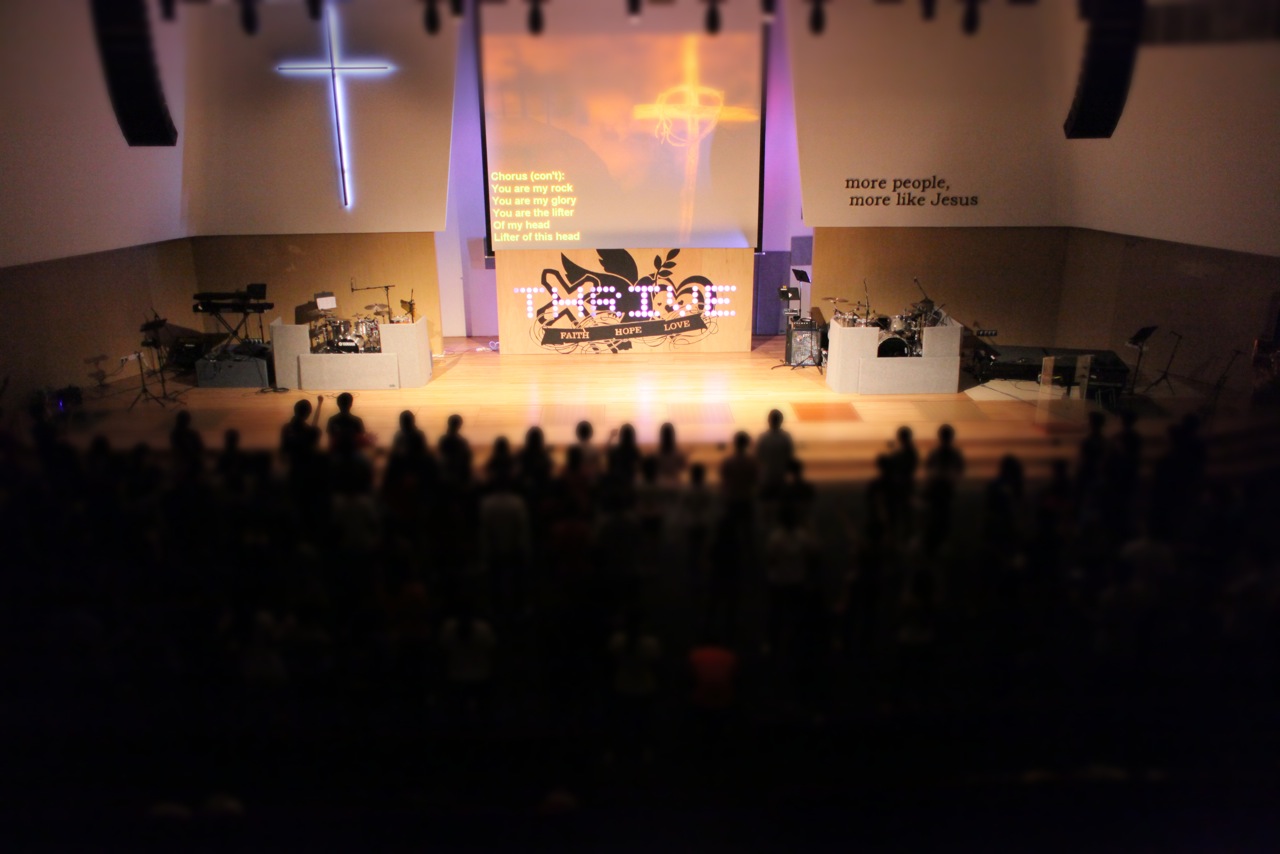
1. Faith is the confidence that what we hope for will actually happen; it gives us assurance about things we cannot see (Hebrews 11:1, NLT).
2. Faith is not what you do but who you know, not where you go but who you follow and not what you hear but who you hear from.
3. For the first time in the history of Grace AG, R-AGE and Rhema, our young people worshipped God without anyone on stage leading them.
4. The greatest testimony today belonged to Kenneth, who by faith rehearsed last night, before requesting for unlikely eventual approval from his CO.
5. Putting out 2 drum sets was sparked by a Newsboys video I watched more than a decade ago and it was a delight to see Janice and CAMY actualising it.
6. I felt the Spirit’s stirring as early as 7:15am, during prayer time with my team, resulting in lots of tears, snot and a revitalised spirit.
7. While the “musician-less” idea was inspired from my time with SOAR247 in Shanghai, it was Melody’s earnest reading of Scripture that moved me deeply.
8. Completely non-sequitur, but I do miss jamming with a band, rocking with a team of musicians and performing my heart out.
9. I will always, always retain a soft spot for the worship team because I spent my first decade of ministry as a worship leader.
10. I enjoy breaking norms, casting vision and accomplishing feats no one has done before; the more it can’t be done, the more I want to do it.
11. When the respect is earned, when the authority is established, when the role is played out, when the work is finished, the title becomes secondary.
12. Ministry is about people. Sometimes it’s about work, but this work should always revolved around people; I thank God I work with young people.
13. Talking to young people whom you’re unfamiliar with at first soon ignites in you God’s love for them, and you’ll never see them the same way again.
missed the bus again? don’t fret.
This morning, I was powerless to prevent the bus from taking off without me.
Normally, I would leave home when SBS iris tells me that my bus was going to depart in 5 minutes. I did likewise today but forgot to compensate for my temporal geriatric movements. One of life’s depressing sights is to catch sight of your bus only to see it leaving the berth. Unlike other mornings, there was no way I could have chased after the bus if I hobbled like Jacob.
The Holy Spirit brought to mind a song which Jeanie led during the leaders’ retreat last August. I vividly remember it for it was my first time hearing the song and I had to quickly grasp it before strumming it out on the guitar for the worship leader. Today, only two lines flashed in my head.
Are you tired of chasing pretty rainbows…
… Give them all, give them all, give them all to Jesus.
I smiled and thanked the Spirit for such a timely reminder. So many times, we get so uptight and insecure when we miss opportunities; have we forgotten that our good God who bestowed this opportunity for us has the magnanimity to provide another? Do we sometimes trust our instincts more than we trust the One who gave us these instincts? Shall we then move away from looking at what we know and fix our eyes instead on Who we know?
Are you chasing grades in school?
Are you chasing promotion at work?
Are you chasing legacies in church?
Are you chasing favour amongst colleagues?
Are you chasing popularity amongst friends?
Are you chasing acceptance amongst family and loved one?
Are you chasing after… yourself…?
I think then, the only remedy to prevent chase exhaustion is to simply surrender. “Give them all” are three basic but profound words. A verb, a noun and an adjective (or pronoun, depending on how you perceive it). When you give them all to Jesus, I’m convinced that God will add to you according to His will. No wonder Jesus said in Matthew 6:33, “But seek first the kingdom of God and His righteousness, and all these things will be added to you.”
It is my prayer that the next time you miss an opportunity, the Spirit would overwhelm you with peace and help you remember that, in His perfect timing, another one is just ’round the corner; and perhaps, the latter one might just be better. Unsurprisingly, I hopped onto the next bus 10 minutes later and while I arrived at the office slightly later, I still reached my destination.
i find myself in a strange place tonight.
I find myself in a strange place tonight.
An arsenal of eight speakers shifted many of my paradigms.
But my heart was never at rest, wrestling hurt and intercession.
Then You hailed a verbal reminder of why we do what we do.
The lessons I’ve learnt will revolutionise my leadership.
But tainted it was by a brutal confession with a closest comrade.
Then You lifted my soul with the heart’s cry of a leader.
Effective comprehension precedes radical application.
Then I put us on the line for hubris bruised Your name.
But prayers and encouragement further fueled the fire in my eyes.
I find myself in a strange place tonight.
***
Faith in What We Don’t See
The fundamental fact of existence is that this trust in God, this faith, is the firm foundation under everything that makes life worth living. It’s our handle on what we can’t see. The act of faith is what distinguished our ancestors, set them above the crowd.
By faith, we see the world called into existence by God’s word, what we see created by what we don’t see.
By an act of faith, Abel brought a better sacrifice to God than Cain. It was what he believed, not what he brought, that made the difference. That’s what God noticed and approved as righteous. After all these centuries, that belief continues to catch our notice.
By an act of faith, Enoch skipped death completely. “They looked all over and couldn’t find him because God had taken him.” We know on the basis of reliable testimony that before he was taken “he pleased God.” It’s impossible to please God apart from faith. And why? Because anyone who wants to approach God must believe both that he exists and that he cares enough to respond to those who seek him.
By faith, Noah built a ship in the middle of dry land. He was warned about something he couldn’t see, and acted on what he was told. The result? His family was saved. His act of faith drew a sharp line between the evil of the unbelieving world and the rightness of the believing world. As a result, Noah became intimate with God.
By an act of faith, Abraham said yes to God’s call to travel to an unknown place that would become his home. When he left he had no idea where he was going. By an act of faith he lived in the country promised him, lived as a stranger camping in tents. Isaac and Jacob did the same, living under the same promise. Abraham did it by keeping his eye on an unseen city with real, eternal foundations–the City designed and built by God.
By faith, barren Sarah was able to become pregnant, old woman as she was at the time, because she believed the One who made a promise would do what he said. That’s how it happened that from one man’s dead and shriveled loins there are now people numbering into the millions.
Each one of these people of faith died not yet having in hand what was promised, but still believing. How did they do it? They saw it way off in the distance, waved their greeting, and accepted the fact that they were transients in this world. People who live this way make it plain that they are looking for their true home. If they were homesick for the old country, they could have gone back any time they wanted. But they were after a far better country than that–heaven country. You can see why God is so proud of them, and has a City waiting for them.
By faith, Abraham, at the time of testing, offered Isaac back to God. Acting in faith, he was as ready to return the promised son, his only son, as he had been to receive him–and this after he had already been told, “Your descendants shall come from Isaac.” Abraham figured that if God wanted to, he could raise the dead. In a sense, that’s what happened when he received Isaac back, alive from off the altar.
By an act of faith, Isaac reached into the future as he blessed Jacob and Esau.
By an act of faith, Jacob on his deathbed blessed each of Joseph’s sons in turn, blessing them with God’s blessing, not his own–as he bowed worshipfully upon his staff.
By an act of faith, Joseph, while dying, prophesied the exodus of Israel, and made arrangements for his own burial.
By an act of faith, Moses’ parents hid him away for three months after his birth. They saw the child’s beauty, and they braved the king’s decree.
By faith, Moses, when grown, refused the privileges of the Egyptian royal house. He chose a hard life with God’s people rather than an opportunistic soft life of sin with the oppressors. He valued suffering in the Messiah’s camp far greater than Egyptian wealth because he was looking ahead, anticipating the payoff. By an act of faith, he turned his heel on Egypt, indifferent to the king’s blind rage. He had his eye on the One no eye can see, and kept right on going. By an act of faith, he kept the Passover Feast and sprinkled Passover blood on each house so that the destroyer of the firstborn wouldn’t touch them.
By an act of faith, Israel walked through the Red Sea on dry ground. The Egyptians tried it and drowned.
By faith, the Israelites marched around the walls of Jericho for seven days, and the walls fell flat.
By an act of faith, Rahab, the Jericho harlot, welcomed the spies and escaped the destruction that came on those who refused to trust God.
I could go on and on, but I’ve run out of time. There are so many more–Gideon, Barak, Samson, Jephthah, David, Samuel, the prophets… Through acts of faith, they toppled kingdoms, made justice work, took the promises for themselves. They were protected from lions, fires, and sword thrusts, turned disadvantage to advantage, won battles, routed alien armies. Women received their loved ones back from the dead. There were those who, under torture, refused to give in and go free, preferring something better: resurrection. Others braved abuse and whips, and, yes, chains and dungeons. We have stories of those who were stoned, sawed in two, murdered in cold blood; stories of vagrants wandering the earth in animal skins, homeless, friendless, powerless–the world didn’t deserve them!-making their way as best they could on the cruel edges of the world.
Not one of these people, even though their lives of faith were exemplary, got their hands on what was promised. God had a better plan for us: that their faith and our faith would come together to make one completed whole, their lives of faith not complete apart from ours.
Hebrews 11 (The Message)
originality through imitation (part four) – the quest for imitation.
Previous post: The Commandment and the Trump Card
***
So how should the overwhelming victory of Christ affect the way we live?
Conclusion: The Quest for Imitation
After God said, “Let us make Man…” (v26), He brought it to pass immediately, “So God created Man…” (v27); God performed what He resolved. Hence, let’s make our resolutions count – may we walk the talk and practise what we preach! Let’s not exchange empty knowledge anymore but engage in passing on true knowledge. I have resolved within myself to share only the benefits I have reaped from applying the truth into my life after I’ve discovered it.
That’s the reason why I [have] changed the concept of our WOW sharing during cell; it will no longer be a sharing of insights we have gained from our quiet time. Instead of just exchanging information in hopes of education, we will now share illumination in hopes of transformation. I’d like to apply what I have learnt in IDMC 2010 – to discover the truth, apply the truth, reap its benefits, and then pass it on to each other. True knowledge is taking real action!
Let’s take some time to examine the arenas of our lives that we can truly become more Christlike in – be it at home, in school, amongst friends or in church. Let’s ask the Holy Spirit to investigate our hearts and minds, and purge the sin in our lives that causes us to be separated instead of consecrated. With that, I humbly conclude that the only way to return to your original perfect condition of creation is through an active and intentional imitation of Jesus Christ, for this will result in our eventual perfection when we finally see God face-to-face.
originality through imitation (part three) – the commandment and the trump card.
Previous post: The Grandeur of the Creation of Man
***
Earlier, I have communicated that everything God created was perfect until sin crept into His scheme of creation. I will now examine the ramifications of the introduction of sin.
The Double-edged Commandment
It’s interesting to note that the first commandment to Man was to be fruitful and multiply. Of all the things God could command Man to do, He chose to authorise Man to reproduce. Why? I think it’s because immediately after God made Man, He was so pleased with Man that He wanted Man to propagate this perfection over all the earth and from generations to generations.
However, as we all know it, sin ruined it all – it not only plundered perfection but it also pillaged the intimacy that Man was actually created and destined to share with God. That’s why instead of spawning perfection, we’re propagating imperfection and iniquity instead, over all the earth and from generations to generations. How sadly ruined God’s original plan of perfection has become!
And with time, Man messed up again and again; after Genesis 2, you will read about how Cain killed Abel… And it seemed to get worse and worse as the story unfolded throughout the rest of the Bible until Jesus Christ came to set the record straight.
Jesus Christ the Trump Card
Now, I think this is where God used His trump card, Jesus Christ, to redeem all Man’s mistakes and to restore the fellowship into its intended intimacy.
Only Jesus Christ is the expressed image of God Himself (read Hebrews 1:1-4 and Philippians 2:6-11). That’s the sole reason we must be Christlike and follow His example. It’s not a suggestion or recommendation but a commandment and instruction! To a great extent, Christlikeness is the only route to Man’s final glory.
The grace of God was evident from Creation – God pardoned Man and allowed him to receive a punishment that was lesser than expected. The theatre of redemption reaches its crescendo at the crucifixion; the grace of God was even more evident at the Cross – where Jesus took on a punishment that was more than expected. He bore the entire weight of the world’s sin on His shoulders.
Now, if we juxtapose Genesis 3’s “The Fall of Man” and Matthew 4’s “The Temptation of Jesus”, we will realise that where Man has failed (in sinning against God), Christ has succeeded – this is pivotal to Christianity! Satan successfully ruined creation the first time and attempted to ruin redemption in his second try but Jesus overcame Satan’s overtures and secured the victory over sin and death on behalf of Man; that’s why we must imitate Christ!
We don’t imitate Christ just because we were taught to do that in Sunday School or because our pastors tell us to do that over the pulpit; we imitate Christ because the Bible has clearly stated His overwhelming triumph over the evil one! In all sense of the expression – Jesus Christ FTW!
***
Next post: Conclusion – The Quest for Imitation
originality through imitation (part two) – the grandeur of the creation of man.
Previous post: Introduction – The Quest for Originality
***
Again, I state that the best creation is the original creation. To understand why I say it is the best, let us first examine the grandeur of the creation of Man; this blew my mind when I pondered over it studiously.
The Last Creation
Since Man was the last item God created, he obviously did not participate or had any hand in the creation of the world. No wonder Job was rhetorically and categorically rebuked by God in Job 38:4 – “Where were you when I laid the foundation of the earth? Tell me, if you have understanding”. Man certainly wasn’t present at first creation!
And there are two obvious merits in being last place. It was first an honour. God added on to His already perfect creation (only He could do that!) and it resulted in Man. I think that’s why God added “very” to “good” in v31. Then it was a favour. To be the final jigsaw of the masterpiece meant that Man could fit in perfectly with all that has already been created. This simply means that Man didn’t need to adjust to his environment because it was custom-made for him! Think about it – no one wants to move into a halfway-renovated house.
The Latest Creation
Is there a difference between last and latest? In my opinion, the former speaks of a(n pre-)arranged order and the latter indicates actual chronology. The whole of creation was already there for Man at the point of his creation. As such, according to Genesis 2:19-20, everything was there for Man to contemplate upon (that’s why Adam named every creature) as well as to take comfort in (as every plant was given for Adam’s consumption), according to Genesis 1:29. What a privilege! I think Adam must have been an extremely creative person with a formidable vocabulary to be able to name every single living thing!
The Lone Creation
The creation of Man was truly unique. Through observation, you’ll realise that everything that was created before Man was by God’s word of command (see vv3, 6, 9, 11, 14, 16, 20, 24) and this signified authority. However, for the creation of Man, it became a word of consultation (see v26). It was as if the Trinity personally undertook this creation together and it signified God’s affection for Man. Doesn’t it give you a warm fuzzy feeling to know that we were made out of love!?
A self-esteem check here; think about it for a moment – Man certainly seemed more important to God than day and night (v3), land and sea (v6), heavens and earth (v9), plants and creatures (vv11, 20, 24), time and season (v14), sun and moon (v16)! If that doesn’t make you feel special enough, then I think you have serious esteem issues! Come on, you and I are more important to God than all that! WOW.
Also, note that the creation of Man was conclusive and not concurrent; in the ESV translation, everything else created was with the conjunction, “And”. But for Man, it was with the conjunction, “Then”; To me, the real business of creation was in making Man because everything seemed to be leading up to it. Hence I think it’s not far off to say that, in the observation of Man’s consecrated creation, we were already set apart by God from the beginning of time; no wonder we are called to be set apart for God today.
The Likeness Creation
This is the part that overwhelmed me because I felt that Man was undeserving of God’s grace. With the greatness of Man’s creation etched in our minds, we must realise then the gravity of this magnificent creation which involved the Father, the Son and the Holy Spirit. That distinguished Man for he was to be dedicated and devoted to his divine Team of designers. As if being the last, latest and lone creation wasn’t enough, God made Man to be the only creation in His likeness. WOW!
Observe – I think God really stressed the significance of creating Man. He described this creation with two different words of similar meaning – “image” (Hebrew: Tselem) and “likeness” (Hebrew: Damuwth); to me, this really manifests the intense identicalness Man has with God.
So, it wouldn’t be wrong to say that at the point of creation, Man was perfect. After all, could there be anything more perfect than this? You can’t perfect perfection! If you add, alter or abstract anything away from it, it will no longer be perfect. Sin was added, the nature of Man was altered and the likeness of God was thereby abstracted. What a tragic ending to what was intended to be a beautiful beginning!
Sin became the blot of water on a canvas of oil painting – it ruined everything. We must come to understand that God cannot have any part with sin. So know that when you sin, you bring about damage and destruction to what was formerly a perfect creation – you. Thank God for His saving grace through Jesus Christ!
***
Next post: The Double-edged Commandment and Jesus Christ the Trump Card


 joey asher | misunderstoodsunshinekid